Can an AI phone assistant handle restaurant bookings during busy service?
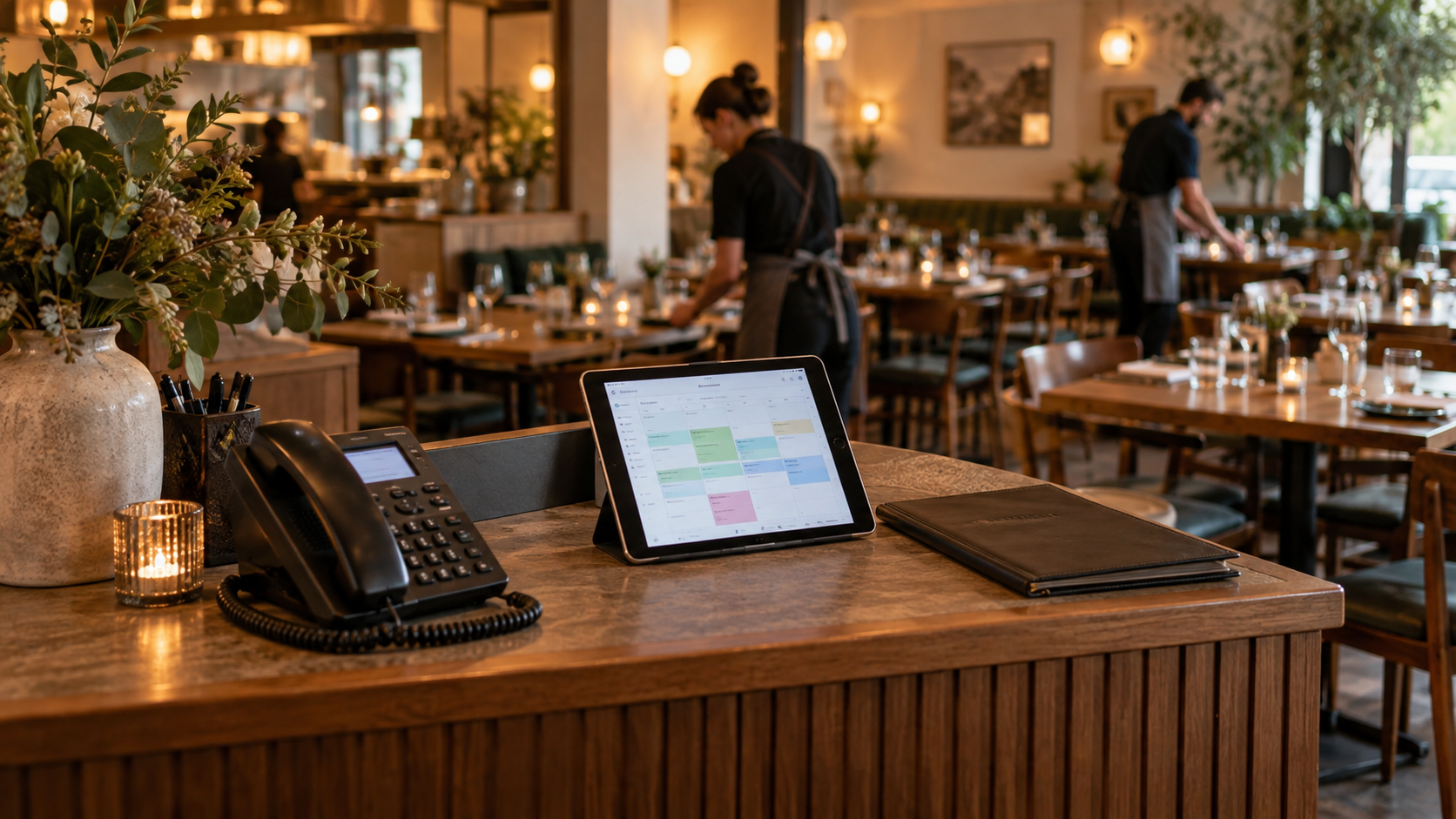
It can be worth evaluating for routine booking enquiries, but only if it works with the reservation rules your venue actually uses. A free table on a screen does not necessarily mean the kitchen or floor team can accept another booking.
Start by separating calls the assistant may answer from bookings it may confirm and requests that need a manager. You can begin with enquiry capture or a booking link if direct reservation access is unavailable.
Review why people call during service
Ask the team to record call reasons across representative services: availability, directions, changing a reservation, large groups, accessibility requests, menu questions and complaints. Keep the log free of unnecessary guest details.
If calls mostly ask for opening hours or a booking link, update the website and reservation information first. If staff regularly leave guests waiting while checking the diary, examine whether a supported phone integration could complete that specific task.
Use the reservation system as the authority
Your diary may already encode service times, cover limits, table combinations and turn times. ResDiary, for example, describes booking rules by time slot, service, volume and booking channel. That is a reason to preserve the reservation system’s controls, not evidence that an arbitrary AI assistant can access them. ResDiary’s explanation of booking rules.
Confirm the exact supported integration with your supplier. Do not let the assistant infer restaurant availability from a generic calendar that omits table or service constraints.
Write a reservation brief for the assistant
- Which services and dates it may book.
- Permitted party sizes and when group enquiries go to a manager.
- Which seating areas callers may choose and whether requests are guaranteed.
- Any deposit or confirmation step, using the approved payment route.
- How cancellations and late-arrival requests are handled.
- Which menu, accessibility and dietary questions need staff review.
Keep dietary and allergy questions with the venue’s approved staff process. An assistant should not infer ingredients or guarantee that a meal will be safe from general menu descriptions.
A booking request is not yet a reservation
An illustrative intake response is: “I can record your request for [party size] on [date] at [time]. The restaurant still needs to confirm it.”
For direct booking, only say it is confirmed after the reservation system returns a successful result. Read back the date, time, party size and location. Explain any outstanding step exactly as the venue has approved.
Test a whole service, not one ideal call
Use a test setup to run through:
- Two requests for the last permitted table at the same time.
- A party that changes from two people to six.
- A caller asking for a table after the final booking time.
- A guest requesting an area that is closed for a private event.
- A booking saved successfully when the confirmation message fails.
- A change to an existing booking with insufficient verification.
- A request that must reach a manager who is currently unavailable.
Inspect the reservation record and staff notification. Check that failed attempts do not create duplicates or leave guests thinking they hold a table.
Make human handover workable during the rush
Agree which calls interrupt service and which create a callback task. “Transfer to the restaurant” may simply send the caller back to the same ringing phone. Nominate the receiving role and the backup process.
Let callers request a person. Explain when a callback is the only available option, and avoid committing the manager to a response time they cannot meet.
Decide whether the trial improved service
Review accurate reservations, incomplete requests, staff corrections and complaints about the phone experience. Ask the floor team whether messages are usable and whether the system created extra diary work.
Start with a narrow scope, such as routine enquiries for one service, and expand only after the diary and guest communications stay consistent. RightLink’s voice AI service can help assess the call flow and integration requirements before a build is agreed.